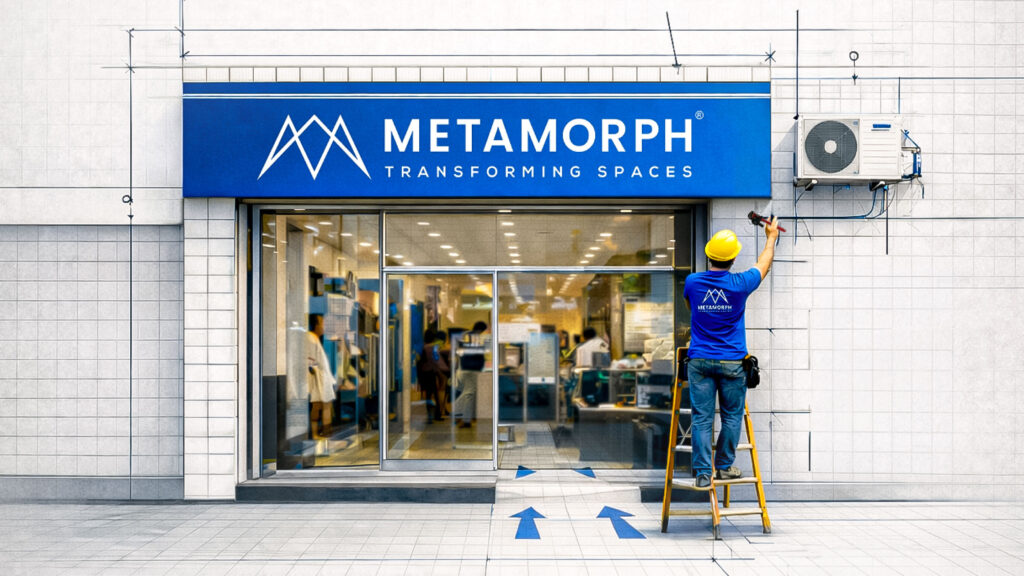
A brand opening its twelfth store expects the façade to go up the way it did in the last eleven. The drawing is approved. The specifications are set. The team has done this before. Then the site survey comes back.
The column is 340mm further left than the structural drawing showed. The electrical provision is on the wrong wall. The neighbouring tenant’s signage cuts directly into the primary sightline. Every one of these conditions was invisible until someone stood in the space with a measuring tape.
This is the part of retail signage that brand manuals do not cover. They define the colour, the typeface, the proportion, the illumination standard. For brands expanding across cities, the real challenge is not designing good signage once. It is maintaining the same colour, the same proportion, the same structural quality, and the same illumination output across thirty locations where no two sites are identical. That requires process, not just craft. This is where the role of a retail branding partner moves beyond design and into engineering, planning, and execution discipline.
At Metamorph, signage is treated as a system that begins at measurement and continues through fabrication and installation, with each stage influencing how the brand finally appears on site.
Storefront Façade Planning in Real Site Conditions
A façade drawing rarely matches the actual site. Columns shift, cladding varies, electrical points are positioned differently, and neighbouring signage affects visibility angles. A measurement survey captures these conditions with precision because even small deviations begin to show once the signage is installed.
In high street environments, the readable distance of signage often ranges between 20 to 40 metres depending on road width and traffic flow. This directly influences letter height, thickness, and contrast. In malls, guidelines define maximum signage height, permissible materials, and luminance levels, which requires adapting the design without losing brand character.
Structural planning is integrated early. Load calculations determine the internal support required for larger signboards. Mounting methods are chosen based on the substrate, whether it is concrete, glass, or composite cladding. Electrical routing is aligned with existing site provisions to avoid exposed wiring or post-installation modifications.
Material Selection Across Indian Climate Zones
Material performance in India varies significantly by region. Coastal cities introduce humidity and corrosion risk. Northern regions see temperature variation that affects expansion and contraction. Dust accumulation in urban environments impacts surface finish and illumination clarity.
Galvanised steel is widely used for internal structures because it provides strength and resistance to corrosion when treated correctly. Aluminium composite panels are preferred for façade surfaces due to their dimensional stability and clean finish, especially when routed for illuminated letters.
Acrylic used in illuminated signage is available in varying thicknesses, selected based on the specific application and performance requirements. Thinner sheets tend to warp over time, especially under heat. Vinyl used for graphics is selected based on exposure conditions, with outdoor grades offering a functional life of around three years in Indian conditions under zone classifications used by material manufacturers.
Material planning is standardised for brands operating at scale. The same specifications are carried across locations with adjustments only where site conditions demand it. This reduces variation in finish and performance across cities.
Fabrication Accuracy and Its Impact on Brand Consistency
Fabrication introduces the first level of physical variation in signage. Letter edges, quality of joints, coating thickness, and LED placement all influence how the signage appears once installed.
Laser cutting and CNC routing define the precision of shapes and lettering. Even minor inconsistencies at this stage become visible when illuminated. Powder coating thickness affects both colour depth and resistance to environmental wear. Inconsistent coating leads to visible variation across installations.
LED placement inside channel letters or sign boxes is planned based on spacing calculations to achieve uniform illumination. Uneven spacing results in hotspots or dull patches, which affects legibility at night. Heat generated within enclosed signage is managed through ventilation planning and driver placement, extending the life of both LEDs and power components.
Across multiple locations, maintaining fabrication consistency requires process control. Without it, the same brand signage begins to look different from one city to another.
Glow Sign Boards and Performance Expectations
Glow sign boards continue to be widely used across Indian retail due to their ability to deliver strong visibility in both day and night conditions. Their construction typically involves an acrylic face, internal LED lighting, and a galvanised or mild steel structure.
Uniform brightness across the surface depends on LED density, diffuser layers, and internal reflectivity. In larger boards, additional reinforcement is required to prevent surface deformation over time. Transformer placement is planned to allow access without dismantling the entire unit.
Electrical protection is built into the system through the use of surge protective devices (SPDs), which safeguard LED drivers and internal components from voltage fluctuations and power surges. This becomes especially important in outdoor installations where exposure to grid instability and environmental conditions can impact long-term performance.
Weather sealing becomes critical in outdoor installations. Improper sealing leads to moisture ingress, which affects both electrical components and surface finish. In regions with heavy rainfall, drainage and sealing details directly influence the lifespan of the signage.
In-Store Retail Signage and Its Role in Customer Movement
Once inside the store, signage shifts from visibility to guidance. Category markers, directional signs, and promotional graphics influence how customers move through the space and interact with products. Storefront signage establishes visibility at a distance, while in-store branding takes over once the customer enters the space.
Placement is determined by sightlines within the store. Signage positioned above typical eye level ensures visibility across aisles. Scale is adjusted based on viewing distance within the store layout. Lighting conditions inside the store also influence material and finish selection to maintain readability.
Consistency between external and internal signage ensures that the brand identity remains uninterrupted from entry to exit. This alignment becomes more complex in multi-location rollouts where store sizes and layouts differ.

Approvals, Safety, and Structural Responsibility
Retail signage installation involves compliance with multiple layers of requirements. Mall operators provide detailed signage guidelines that define size, material, illumination levels, and placement zones. Local authorities require necessary approvals for outdoor installations.
Structural safety is addressed through load calculations and mounting design. Wind load becomes a significant factor for elevated signage, especially in open high street environments. Electrical safety includes proper earthing, concealed wiring, and accessible control units.
Pre-installation audits document site conditions and confirm that the proposed installation aligns with both structural and regulatory requirements.
Designing for Maintenance at Scale
Retail signage remains in continuous use and requires periodic servicing. Access to LED drivers, wiring, and internal components is planned during the design stage to avoid dismantling the entire structure during maintenance.
Modular construction allows specific sections to be replaced without affecting the full installation. This becomes critical for brands with multiple stores, where maintenance efficiency directly affects operational continuity.
Material selection also influences maintenance cycles. Finishes that resist dust accumulation and surface degradation reduce the frequency of cleaning and repair.
Retail Signage as an Engineered Brand Asset
Retail signage represents a continuous brand presence across locations and over time. Its performance depends on decisions made at every stage, from measurement and material selection to fabrication and installation.
For brands working with a retail branding agency, signage becomes a controlled system that supports expansion without compromising consistency. It reflects how well a brand translates its identity into physical environments that are exposed to real-world conditions every day.
At Metamorph, this system is built through detailed planning, controlled fabrication, and coordinated execution across locations, ensuring that each installation contributes to a consistent and durable brand presence.