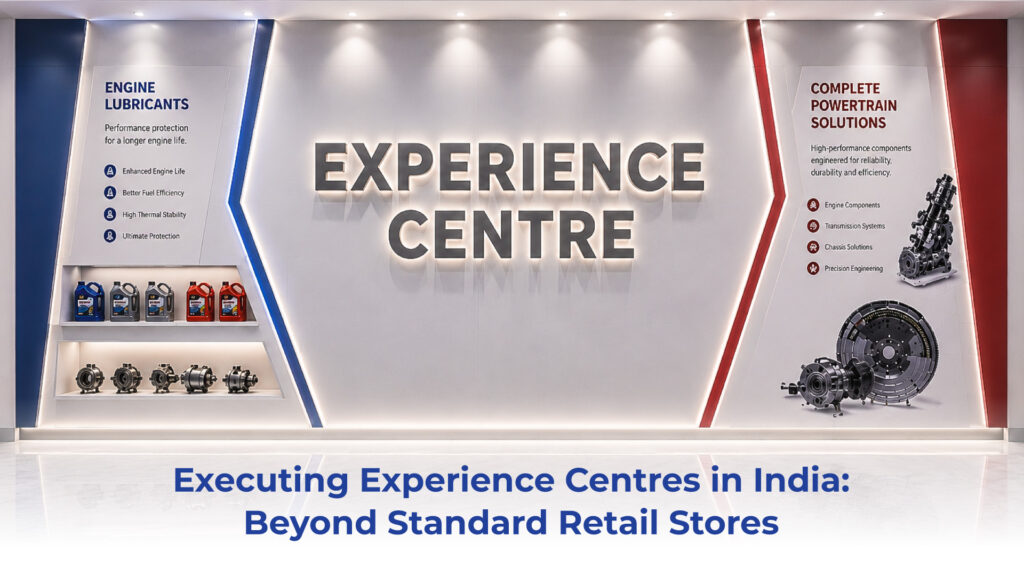
A panel arrives on site with a 3 mm variation along one edge, gets aligned visually and fixed in place, and in a standard store the joint settles into the background because nothing in the surrounding environment forces the eye to stay on that line long enough to register the shift.
In an experience centre, that same panel sits directly under a focused linear light that runs across the wall, turning the joint into a visible shadow line at eye level, and when the supervisor checks it against the drawing the correction requires removing two already installed panels and resetting the support, a call that runs directly into the opening timeline, so the panel stays and the line becomes part of the finished space.
Where Standard Retail Execution Breaks Down
A ceiling grid stretches across a primary display zone where the lighting is designed to wash evenly over the surface, but a minor level difference in the base structure causes one section to drop slightly, and instead of reopening the installed portion the installer aligns the next section to maintain continuity, which holds the grid visually in parts while introducing a step that becomes visible when the ceiling is viewed along its full length.
Site Conditions and Spatial Adjustments
A column sits 150 mm off the expected grid inside a distributor-led environment, and the layout that arrives on site places a central display along the main axis of entry, so the display shifts to clear the column and circulation wraps around the adjusted position, which keeps the store functional while moving the product slightly off-axis from the intended sightline that originally anchored the space.
In another instance, the column position is mapped during the (the what?) and fed back into the layout before fabrication begins, allowing the display to be re-centred within the available span so that the spatial balance holds without requiring a decision at site, a level of alignment typically built into a structured Retail Rollout where variations are resolved before execution begins.
Material Decisions and Surface Behaviour
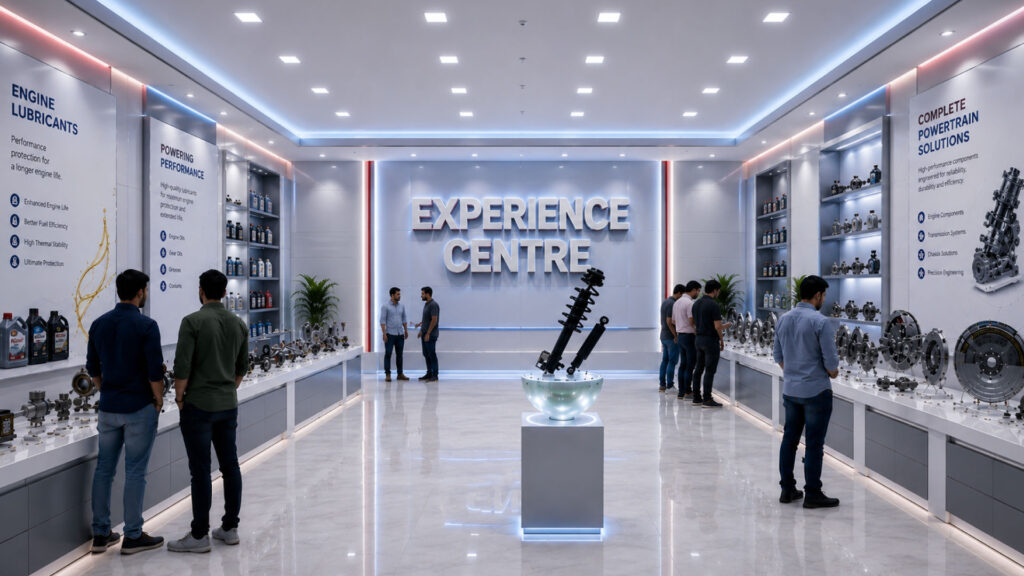
A matte wall finish that reads as controlled warmth under sample lighting begins to behave differently once installed under a steeper lighting angle on site, where the surface starts reflecting light unevenly through the day, creating a variation that shifts how the In-Store Branding is perceived across locations even though the material specification remains unchanged.
A fixture edge that leaves fabrication with a sharp, clean profile meets a slightly uneven surface during installation, and the installer closes the gap by feathering the joint, which resolves the immediate fit but softens the edge across a continuous run, turning what was designed as a crisp line into one that loses definition as it extends through the space.
Coordination Across Stakeholders
A fixture drawing is revised after production schedules are already in motion, and when the updated approval arrives later than planned the site engineer proceeds with electrical work to keep the timeline intact, placing conduits based on the earlier layout because waiting would push multiple downstream activities, so by the time the revised fixture reaches site the connection points are already fixed inside the wall.
The electrician aligns the installation to those existing conduits, which keeps the work moving but shifts the lighting position slightly away from the intended highlight zone, and the space comes together through a series of locally resolved decisions that never fully realign as a complete system.
Retail Signage and On-Ground Detailing
A façade Retail Signage panel is mounted against a wall that carries a slight surface variation, and while the installer packs the mounting points to bring the face into alignment, one corner holds a marginal offset that becomes visible once the internal illumination is switched on, especially along the edge where the light spill reveals the deviation.
Resetting the panel at that stage requires reopening the mounting and adjusting the frame, which conflicts directly with the fixed opening timeline, so the installed condition remains and the skew becomes part of how the façade is read.
Structured Execution and What It Prevents
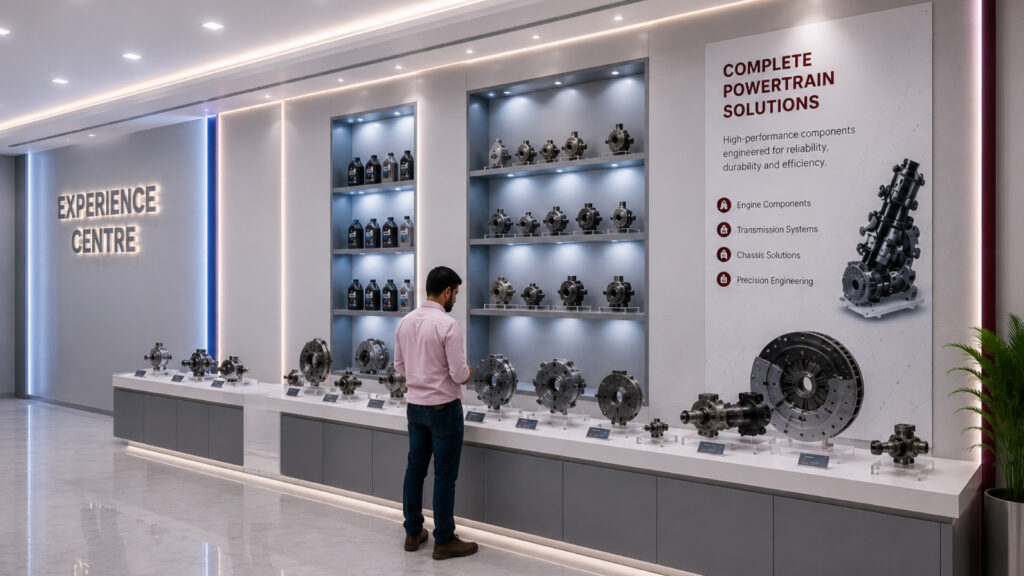
During pre-production, a façade unit is checked against site measurements that show a 20 mm variation in wall depth, which leads to an adjustment in the mounting frame and a repositioning of the internal wiring routes within the fabrication drawing itself, aligning the unit to the actual condition it will meet rather than the assumed one, an intervention that typically sits with a Retail Branding Partner working at pre-production stage.
At installation, the unit sits flush against the wall and the illumination spreads evenly across the surface, whereas in a parallel rollout where this adjustment is absent the same unit meets the wall with a slight gap that is corrected at the brackets, introducing uneven light distribution along the edges that remains visible once the store is operational.
Conclusion
Experience centres hold a level of visual precision where every alignment, surface, and transition carries weight in how the space is perceived, and while the design intent may remain consistent across locations, the built outcome follows the path of decisions made across survey, planning, fabrication, and installation.
The difference sits in decisions made long before the store opened.