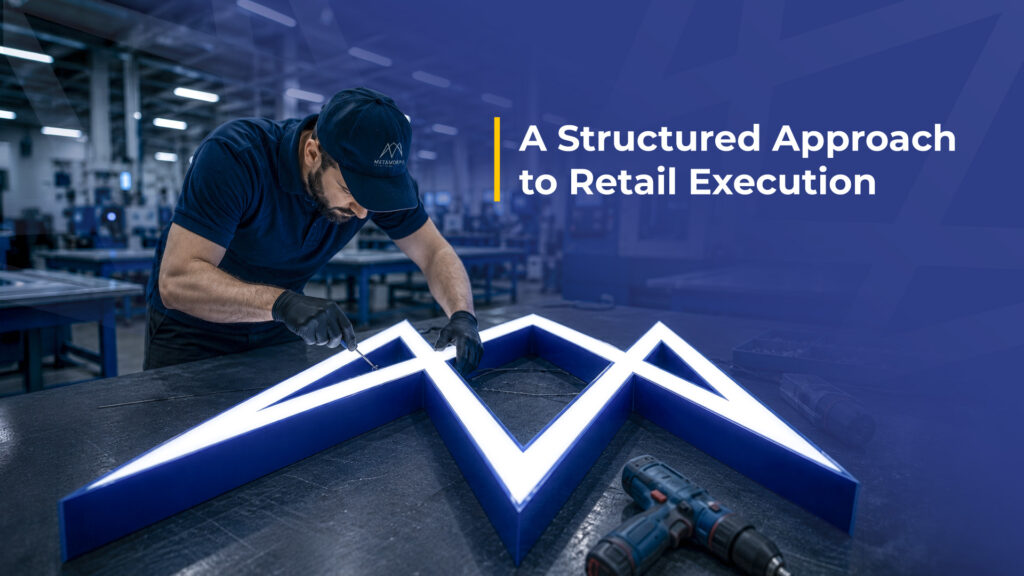
Most retail execution problems don’t start on site. They start much earlier, in a missed measurement, an assumption carried into a drawing, or a material approved without checking how it behaves under real conditions.
By the time a problem becomes visible, it has already passed through three or four stages. Fixing it at installation costs more than it would have at planning. That gap between where a problem originates and where it surfaces is what a structured execution process is designed to close.
Where Does a Retail Rollout Begin?
A Retail Rollout begins with planning, but planning is only useful if it reflects reality.
This means defining scope clearly, mapping responsibilities across teams, and aligning timelines to actual site readiness and not assumed readiness. A location listed as “ready” on a schedule but lacking confirmed electrical access or completed civil work is not a planning input. It is a risk that hasn’t been named yet.
When planning is grounded in verified information, every downstream stage including design, production, and installation starts from a stable base. When it isn’t, each stage inherits the same uncertainty and resolves it independently.
Site Recce: Where Assumptions Are Either Confirmed or Replaced
Site recce is the stage that determines how accurate everything else will be.
These need to be recorded on site, not estimated from drawings:
- Floor dimensions and usable frontage
- Structural positions including columns and beams
- Ceiling heights across zones
- Service line locations and electrical access points
- Access constraints affecting installation sequencing
A column that sits 120mm off the expected grid doesn’t just affect one fixture. It shifts the layout, which affects fabrication drawings, which affects how installation proceeds.
When recce is thorough, design adapts before production begins. When it isn’t, that same 120mm gets resolved on site by the installation team, under time pressure, with whatever flexibility the space allows. The outcome is a correction rather than a decision, and corrections at installation rarely match what was originally intended.
Design Adaptation and Store Branding Consistency
Design adaptation is where site reality and brand intent are reconciled.
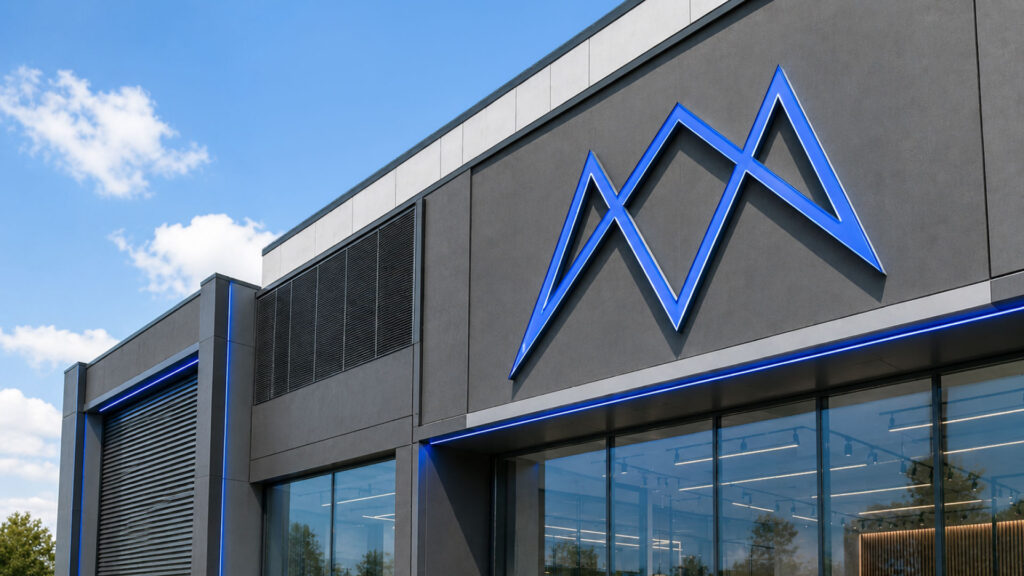
For Store Branding to remain consistent across locations, design cannot simply be replicated. It needs to be interpreted against each site’s actual conditions. A fixture designed for a 3.2m ceiling height behaves differently in a space with 2.8m. Retail Signage specified for a flush wall reads differently on a surface with an embedded beam.
This stage requires judgment, not just adjustment. The goal is to preserve visual hierarchy, spatial proportion, and In-Store Branding consistency even when the site requires the design to flex. When this stage is treated as administrative rather than critical, small inconsistencies enter production and multiply across locations.
Production: Where Decisions Become Physical
Production converts approved drawings into fabricated output. It is also the stage where the cumulative effect of earlier decisions becomes clearest.
A drawing that reflects accurate site conditions produces elements that install cleanly. A drawing built on assumptions produces elements that require adjustment at every site that shares the same condition.
Material consistency matters here too. Finish tone, surface behaviour under different lighting, edge profiles, panel thickness: these need to be controlled across batches, not just approved at sample stage. Retail Signage and fixture elements that look identical in isolation can read differently across ten stores if batch consistency isn’t actively managed through production.
Installation: The Final Test of Everything That Came Before
Installation is where execution either holds or doesn’t.
When earlier stages are aligned, installation is largely predictable. Teams work from drawings that reflect actual conditions. Materials arrive fabricated to those conditions. The sequence moves forward without site-level improvisation.
When earlier stages carry unresolved gaps, installation becomes a problem-solving exercise. Retail Signage is repositioned to clear unexpected structural elements. Fixtures are adjusted to fit spaces that don’t match the drawings. Each correction is local, reasonable, and invisible in isolation but across a multi-location Retail Rollout, these corrections accumulate into visible inconsistency.
The quality of installation is largely determined before the first team arrives on site.
Why Connection Between Stages Defines Retail Rollout Quality
Retail execution is a dependency chain, not a sequence of independent tasks.
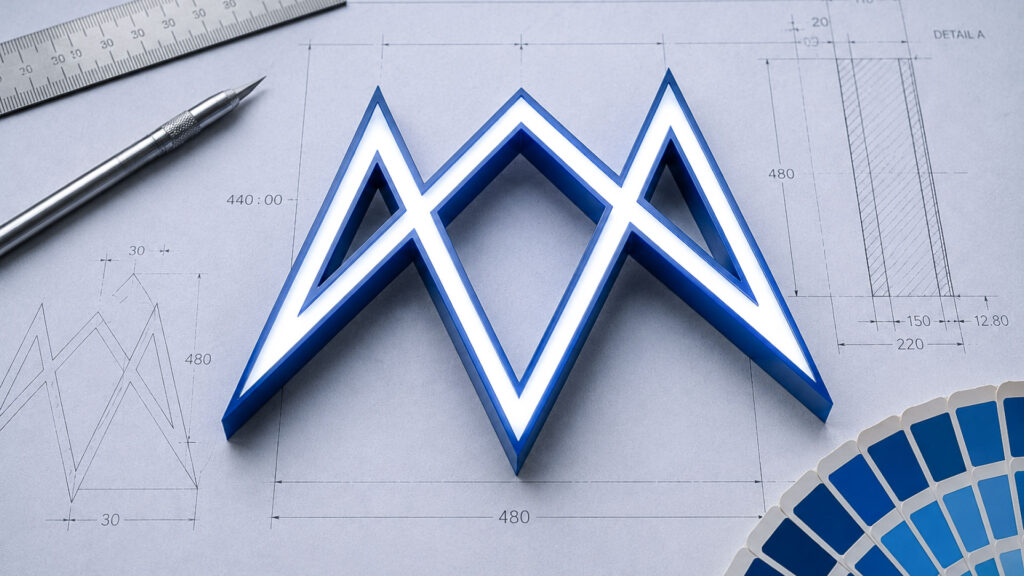
Planning shapes what recce looks for. Recce shapes how design adapts. Design shapes what goes into production. Production shapes what installation receives. Each stage carries forward both the quality and the gaps of the stage before it.
This is how Metamorph approaches every Retail Rollout. As a Retail Branding Partner operating across the full execution chain, the work isn’t limited to managing handoffs. It is about maintaining the logic connecting each decision to the next, so that what reaches the site reflects what was intended at the start.
Conclusion
Retail execution is not defined by how well individual stages are managed in isolation.
It is defined by how well they stay connected. When planning, recce, design, production, and installation operate as one system, Store Branding and Retail Signage remain consistent across every location regardless of format, city, or site condition.That connection is what makes a Retail Rollout scalable without losing control over the detail that makes the brand recognisable.